If you’re serious about FPV flying, you’ve probably been stuck on one question: DJI Avata 360 vs Avata 2 — which one actually makes sense in 2026?
Both drones from DJI bring powerful FPV capabilities, but they’re built with very different intentions. One focuses on creative freedom with 360 capture, while the other delivers consistent, production-ready results.
In this guide, I’ll break down the DJI Avata 360 vs Avata 2 comparison in a way that actually helps you decide—based on real-world use, not just specs.
What to Expect in This Comparison
We’ll cover:
- Real-world flight performance
- Camera differences (huge deciding factor)
- Workflow impact (very important in India)
- Who each drone is actually for
- Mistakes to avoid
DJI Avata 360 vs Avata 2: Quick Overview
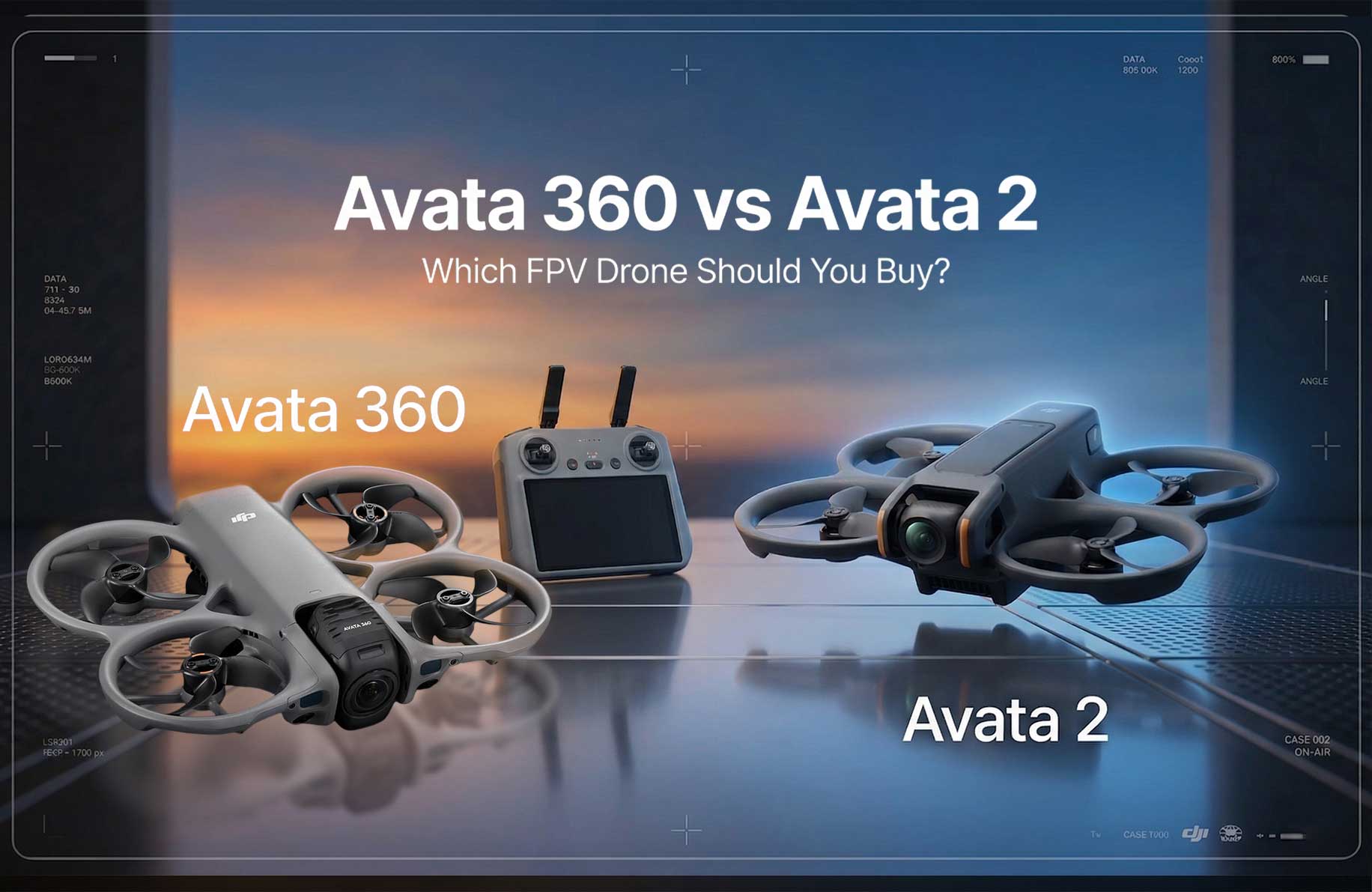
- DJI Avata 360 → A hybrid FPV + 360° drone designed for immersive, reframable content
- DJI Avata 2 → A refined FPV drone built for stability, safety, and professional output
When comparing DJI Avata 360 vs Avata 2, you’re really choosing between:
👉 Creative flexibility vs reliable workflow
Camera & Video: The Real Game Changer
DJI Avata 360 – Shoot First, Frame Later
This is where things get interesting.
The Avata 360 comes with:
- Dual fisheye lenses (front + rear)
- Up to 8K 360° video recording
- Approx 120MP 360 photos
- Ability to switch to single-lens FPV mode
In simple terms:
👉 You capture everything… and decide the angle later.
This is powerful for:
- Travel content
- Cinematic FPV edits
- Social media storytelling
But here’s the honest part:
⚠️ You’ll spend significantly more time in editing.
You’ll need:
- Reframing software (DJI Studio)
- A decent PC
- Time and skill
This is the biggest hidden factor in the DJI Avata 360 vs Avata 2 comparison.
DJI Avata 2 – What You Shoot Is What You Deliver
Avata 2 keeps things simple and efficient:
- Stabilized, ready-to-use footage
- No heavy reframing needed
- Faster turnaround
For client work, especially in India:
👉 Speed = money
That’s why many professionals prefer Avata 2 in the DJI Avata 360 vs Avata 2 decision.
Flight Performance & Safety
Avata 360 – Powerful but Demanding
From official specs and real-world usage:
- Flight time: ~22–23 minutes
- Speed: ~65 km/h
- Transmission: O4 system (low latency)
- Omnidirectional obstacle sensing
It’s capable—but:
- Requires better control
- Slightly less forgiving in tight environments
Avata 2 – Stable and Confidence-Inspiring
Avata 2 focuses on:
- Better hover stability
- Smoother braking
- Safer indoor flying
For:
- Real estate
- Indoor shoots
- Client projects
👉 Avata 2 wins in control and safety.
Design & Practical Usability
Avata 360
- Cinewhoop design with ducted propellers
- Built-in propeller guards
- Replaceable lens system (big plus)
- ~455g weight
Good for:
- Close proximity shots
- Indoor creative flying
Avata 2
- More refined and balanced design
- Better durability for daily use
- Easier maintenance
DJI Avata 360 vs Avata 2 Comparison Table
| Feature | DJI Avata 360 | DJI Avata 2 |
|---|---|---|
| Camera | Dual lens 360 system | Standard FPV camera |
| Video | 8K 360° HDR | High-quality stabilized video |
| Photo | ~120MP | Standard |
| Modes | 360 + FPV | FPV |
| Flight Time | ~23 min | ~23 min |
| Sensors | Omnidirectional | Advanced safety sensors |
| Editing | Heavy | Minimal |
| Best For | Creative content | Client work |
Real-World Use Cases (India)
Real Estate
- Avata 2 → Reliable, smooth indoor flying
- Avata 360 → Too complex
Travel Content
- Avata 360 → Unique immersive shots
- Avata 2 → Standard FPV
Commercial Work
- Avata 2 → Faster delivery
- Avata 360 → Longer editing cycle
So in the DJI Avata 360 vs Avata 2 debate:
👉 Ask yourself: Do I need creativity or efficiency?
Who Should Buy What?
Choose Avata 360 if:
- You create cinematic or social media content
- You want 360 reframing flexibility
- You’re comfortable with editing workflows
Choose Avata 2 if:
- You work with clients regularly
- You need fast delivery
- You prefer simple, reliable shooting
Common Mistakes to Avoid
1. Buying Avata 360 Without Editing Skills
You’ll struggle to use its full potential.
2. Ignoring Workflow Speed
In India, faster delivery often matters more than creative flexibility.
3. Choosing Based on Hype
Many buyers choose 360 just because it sounds “advanced”.
Reality:
👉 It’s not always practical.
Pros and Cons
DJI Avata 360
Pros:
- True 360° capture
- Reframe shots after shooting
- Unique content creation
Cons:
- Heavy editing required
- Needs powerful system
- Not ideal for quick projects
DJI Avata 2
Pros:
- Stable and reliable
- Easy workflow
- Better for professional jobs
Cons:
- Less creative flexibility
- Standard output
Final Verdict: DJI Avata 360 vs Avata 2
Here’s the honest answer:
- If you are a creative storyteller or content creator, Avata 360 is exciting and powerful
- If you are a working FPV professional, Avata 2 is the smarter investment
For most users in India, Avata 2 wins the DJI Avata 360 vs Avata 2 comparison because it delivers consistent results with less effort.
FAQs
1. DJI Avata 360 vs Avata 2 – which is better?
It depends. Avata 360 is better for creativity, while Avata 2 is better for practical use.
2. Is DJI Avata 360 good for beginners?
No. It requires editing skills and better control experience.
3. Which drone is better for client work?
Avata 2 is more efficient and reliable for professional work.
4. Does Avata 360 shoot normal video?
Yes, it has a single-lens FPV mode, but its main strength is 360 capture.
5. Is Avata 360 worth it in 2026?
Only if you plan to use its 360 features seriously.